When Money Serves Your Life (Instead of the Other Way Around)
October 27, 2026
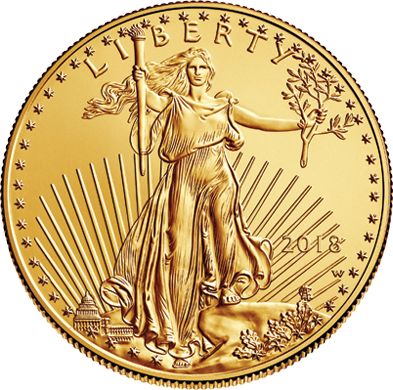
George Ford Smith has a thought-provoking essay up at the Mises Institute this week: When Money Becomes Everything. It opens with a scene from The Pawnbroker, the 1964 film in which Sol Nazerman is asked whether money is everything and answers, "Money is the whole thing." From there Smith walks through what money actually is, how governments took it over, and who wins and loses when the Federal Reserve creates more of it.
It's worth reading in full. I want to pick up where it leaves off.
What Smith gets right
The essay's foundation comes straight from Carl Menger: money was never invented by a king or a committee. It emerged from the market, as people discovered that certain goods - durable, portable, divisible, and scarce - were easier to trade than others. Gold and silver won that contest over thousands of years. Nobody decreed it.
Paper came later, and it came as a receipt. A bank note was a claim on metal sitting in a vault. As Smith puts it:
"Only the commodities - gold and silver - were money. Or they were until government intervened."
Once government severed the receipt from the metal, the receipt itself became the money, and whoever controlled the printing press controlled the value of everyone's savings. Smith's line on this is blunt, and I think correct:
"Printing additional money does not create another house, harvest another crop, or cure another disease."
New dollars don't create new wealth. They move existing wealth from the people who get the new money last - savers, retirees, anyone on a fixed income - to the people who get it first. Ludwig von Mises described this effect a century ago, and Henry Hazlitt spent a career explaining why the "one lesson" of economics is to look past the immediate benefit to the longer-run cost. The immediate benefit of money creation is obvious. The cost shows up later, in a grocery bill.
Smith closes with this:
"The money we earn should serve our lives, not the war machine roaming the planet."
Where the essay stops - and where I'd keep going
Essays like this usually end in one of two places: a call to audit (or end) the Fed, or an appeal to the next generation to understand what's been done to their money. Both are fine. Neither is something you can do before lunch.
Here's the thing the Austrian tradition has always emphasized: money is a market phenomenon. It wasn't handed down from above, and it doesn't have to be fixed from above either. Mises wrote that the idea of sound money "was devised as an instrument for the protection of civil liberties against despotic inroads on the part of governments." Protection is something you can choose. You don't need Congress to pass a bill before you decide what you'll save in and what you'll spend.
That's the question I'd add to Smith's essay. Not just who controls the money, but: what's stopping you from using better money today?
For most of the last century, the honest answer was "practicality." You could buy gold coins and put them in a safe, but you couldn't pay the plumber with them. Gold was a good store of value and a terrible medium of exchange. So people kept their savings in dollars by default - not because the dollar was good money, but because it was the only money that worked at the checkout counter.
That's no longer true in Texas
This is the problem we set out to solve with TxGold. Every TxGold is a claim on a specific weight of physical gold - 1/1000 of a troy ounce - stored in the Texas Bullion Depository and insured by Lloyd's of London. The gold is held under a bailment agreement, which means we store it; we never own it. You can redeem for physical coins or bars whenever you choose.
What makes it different from a coin in a safe is that it moves. From the app, you can send gold to a friend for free, pay a business that accepts it, or request a payment from a customer. Payments settle instantly and are final. It is, in the most literal sense, the "receipt for metal" that Smith describes - except this time the receipt is always, verifiably, 100% backed, and there is no printing press.
Texas has noticed, too. In 2025 the Legislature passed House Bill 1056, recognizing gold and silver as legal tender for everyday transactions through approved electronic systems. The law takes effect in 2027. We've been building toward exactly that since 2019.
Money as a tool, not a master
Smith's title asks what happens when money becomes everything. The Austrian answer is that money should be nothing in itself - just the tool that lets strangers cooperate, the measuring stick that tells a baker whether to bake more bread. A measuring stick that shrinks a little every year, at the discretion of a central bank, isn't serving anyone's life. It's quietly taxing it.
You can't change that from your kitchen table. But you can stop participating in it, at least for the part of your life you control. Save in gold. Pay in gold when you can. Ask the businesses you frequent to accept it.
Sound money was never going to be restored by decree. It will be restored the same way it emerged in the first place - one person, one trade, one decision at a time.
Download the TxGold app · Accept TxGold at your business